segunda-feira, 7 de abril de 2025

NLP4RE - Paper Session 01 - Hybrid session

Open Challenges in NLP for NFRs: A focus on Semantics, Generatlization, and Interpretability.
Rrezarta Krasniqi

Key research question: What are the key challenges to leveraging existing NLP models within the NFR domain, with respect to semantic soundess, ontology generalizability and output interpretability.

The system shall ensure high security for financial transactions.

Ambiguity: encryption, access control... etc. What exacltly does high security means.

*This work connects really well with OBRE. We should contact her to collaborate. Many well-illustrated problems:

The website shall have low latency response times during high traffic events, ensuring smooth user experience. Current NLP models fail to capture the context of slow since it is only inferred.

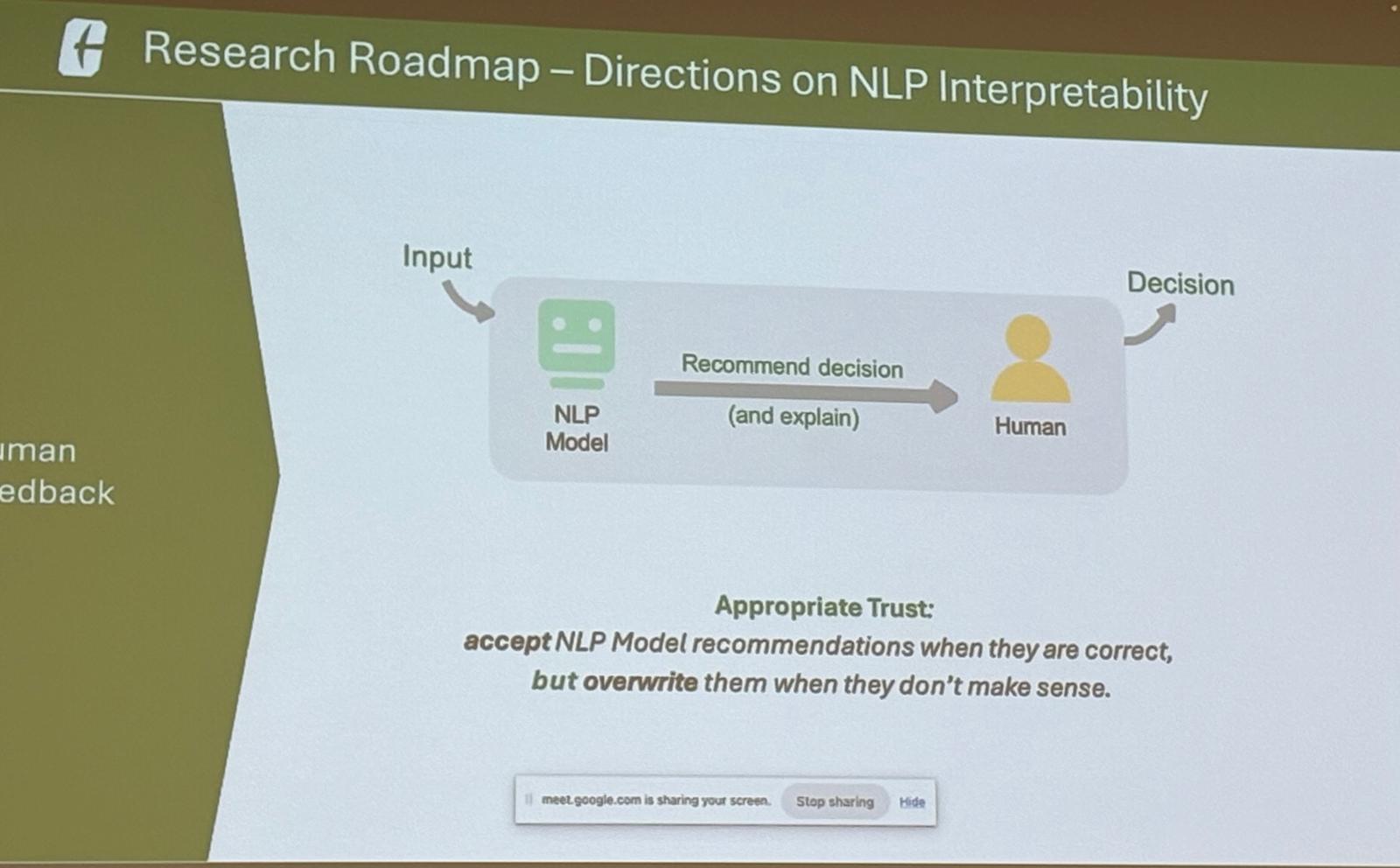
She proposes a roadmap concerned with three diferent aspects:

Each of the aspects is presented and illustrated: Ontology generalizability:


Interpretability:


------------- Main motivations:

They just applied GPT because the company had a license. There was no comparison with other LLMs. There was a question about this, claiming that perhaps ChatGPT costs are not needed. Applied approach: empirical studies (4 studies)


In general:


Study 1


Precision is very high, but recall is moderate, meaning tha ChatGPT missed quite some instances.

Study 2:


Impression of the engineers (there is no ground truth for this study, so the assessment is quite subjective

*All the content of these studies are contained in a GitHub link presented in the paper.

REFSQ'25 - CREARE + VivaRE - Invited Talk

Towards Responsible Agile Software Development: A Procss-Model-Driven Approach
Chair of PM and IS
Humboldt0Universitat zu Berlin

Cielo González
- 12 years of experience in industry
- IT Project manager, Product Owener, Req. Engineer
Domains: Financial, Automotive, Education, Government, Aerospace

Background
PhD on Software development methodologis/processes
M.SC IS Management
BSc Systems Engineering

Who is the driving force behind the rapid technological progress and growing digitalization?

Tech companies,
Eterpreneurs
Research institutions
Economic incentives
Users...

In summary: People are in the center.
In a highly digital society, defining how we created sofwater has an impact in how we shape software
Agile methodologies are (among) the most popular approaches now.

Challenges: - lack of effective communication
- lack of project documentation
- lack of frewuent feedback
- lack of technologiy reserouces

She works on Ethics and especially considering the impact on groups and communities.
In her talk, she presents seven reasons why Ethics is not the focus of Software Development. And she will focus on Ethical being something externa, like an add-on.
She is developing a method with automated full support to support Ethicality Requirements. *It is very interesting!!!

Three main features are highlighted:
- Requirements and Specification - based on fairness and well-being checklists associated to activities in a BPMN model.
- Follow-up - Remember analysts that they have a warning for some activities (they look red in the model) whose checklist was checke dcontaining ethical issues.
- Track changes - verify the several versions, helping analysts to prioritize requirements.

Checklist
Additionaly :
She plans to use NN for bringing models from paper to the tool.

sexta-feira, 6 de setembro de 2024

GO-FAIR Workshop - September 6th, 2024

This day is dedicated to talks to Barend Mons, culminating in his retirement speech this afternoon. The day was open with a nice talk by George Strawn and followed by a funny examination of Barend's quotes in the Pre-FAIR (by Ruben Kok/Nico van Meeteren/Jan Velterop). Here is an intereting quote from the latter:


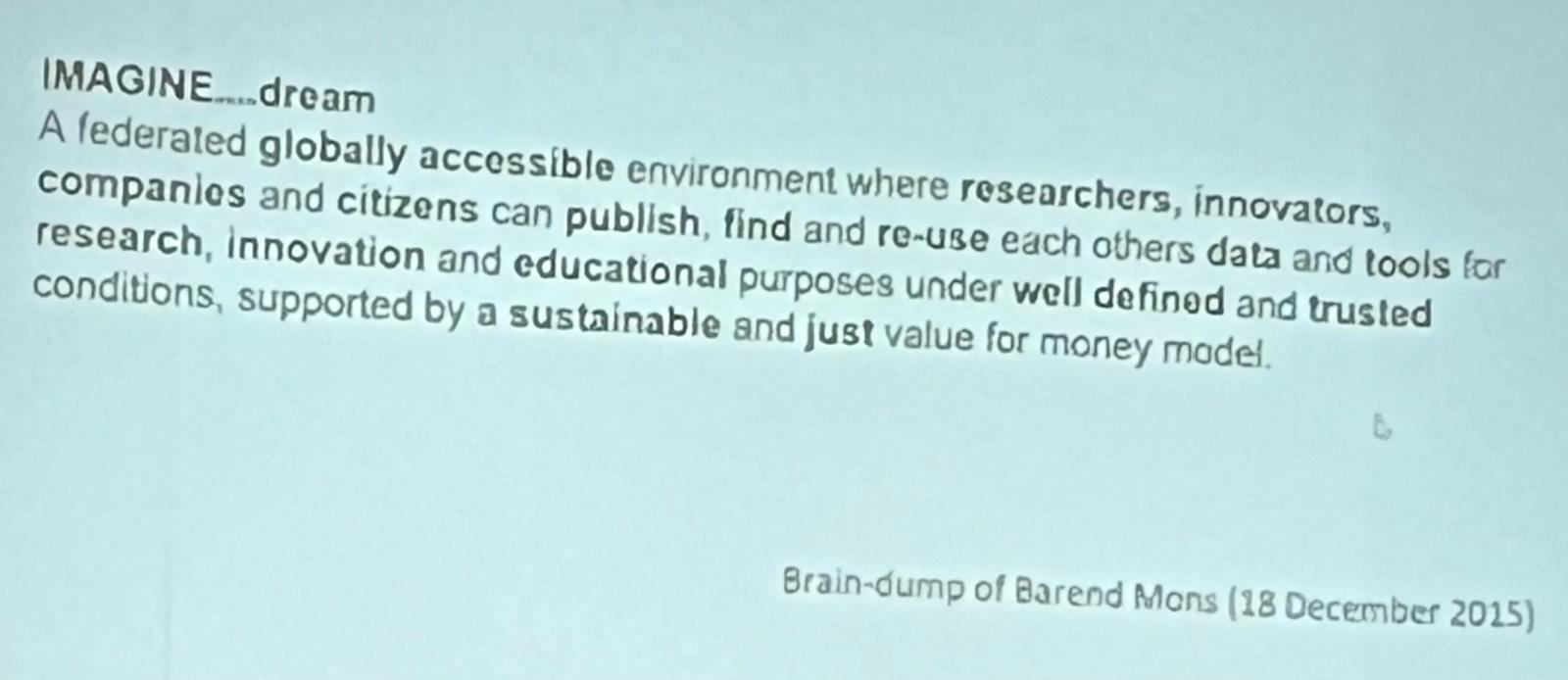
Talk about Monssense (by Karel Luyben), a chat of three researchers and friends who discuss the ideas of their research. Here is an interesting summary of Barend's main idea:


Jean Claude Burgelman talked about how science was thought when he met Barend:


There was an interesting talk about Barend and his relationship to CODATA by Simon Hodson. And in this talk, I learned about some very relevant results from the WorldFAIR Project (still ongoing):


In particular, we should pay attention at CDIF - Cross Domain Interoperability Framework.
New CODATA projects:


Mercè Crosas, the new president of CODATA also said a few words. She is also the person behind the Barcelona Super Computing Center.

Christina Kirkpatrick (the person behind the supercomputer center in San Diego (US) spoke to us how she met Barend and Albert and how their work started. She reminded us of the FAIR pillars (see below) and reminded us that the biggest challenge is actually changing people's mindset regarding how to deal with scientific data.


She also talked about the GO-FAIR offices around the world and their roles:


René Belsø talked about different approaches (and competencies) on developing infrastructure in this very interesting chart:


Hana Pergl was an operation manager for GO-FAIR and now she is working for CODATA. Here is her historical view about GO-FAIR:


Elena Giglia conducted on a community building session with interaction from the audience through Menti. It was really fun! Carole Gobble reflected on important questions, such as: What is FAIR after all? How much is FAIR enough? Some people think enough means "FAIRly AI Ready".
She is involved in the creation of several standards related to FAIR:


And the only way to really go FAIR worldwide is to make FAIR disappear:


FAIR enough (definition from the Collins dictionary): to acknowldege what someone has just said and to indicate that you understand it. (Even though perhaps you disagree -- her addition) :)

She presented a very interesting model resembling a layered/block based FAIR archictecture:

She also mentioned Biofair - A BioCommons infrastructure for UK life science researchers
"Data and Reality" was the title of Giancarlo's talk
He talked about concepts and the need for conceptualization. And he placed an important focus on "qua individuals", as a favorite ontological notion of Barend (introduced by Giancarlo in their first encounter). One of the most interesting quotes he brought in his talk was the following:


And one point that was probably the highlight is when he said that the most important piece of scientific information he has today is that counterfactual info cannot be extracted from the data (data is always about something that did happen), and counterfactual info is essential to help us shape the world. He finalized the talk by saying that being able to create such ideas and possible worlds is one of Barend's talents.

quinta-feira, 5 de setembro de 2024

GO-FAIR Workshop - September 5th, 2024

My question to LIFES Core Scientific Members: How can FAIR become widespread? What kind of resources/help do you provide?
  1. Data stewards are very important fort hat
  2. Workflows/processes published on how to do it
  3. Catalysts – collection of decisions that others made and that can be reused.
FAIR Data Trains need to cross boarders.
It is easy to make the trains interoperate without an ecosystem where people/institutions are taken the same choices of languages/frameworks to use. But we have to make the trians interoperable regardless of the ecosystem's technical choices.
Thus we need to have a Semantic FAIR library of instructions to connec all trains.


LIFES different types of partners


FAIR Capacity Building Program - Training developed by the GO FAIR Foundation

FAIR Data Engineering - Herman van Haagen
Hoogeschool Leiden
They developed a new course named FAIR Data Engineering to start this November.


Companies offerring tools/resources for FAIR:
  1. 4medbox - infrastructure to control health personal data
  2. FAIR Solutions< provides services/resources to facilitate FAIR adoption
  3. WDS, focused on developing FAIR data repositories, offers serves for FAIR adoption, including AI readiness resources
  4. Elsevier Research Collaborations - there is a branch that wants to 'sell' the data/knowledge associated to the papers. Joining LIFES makes sense for them because they want to be able to sell bits of data, instead of only selling the whole dataset.
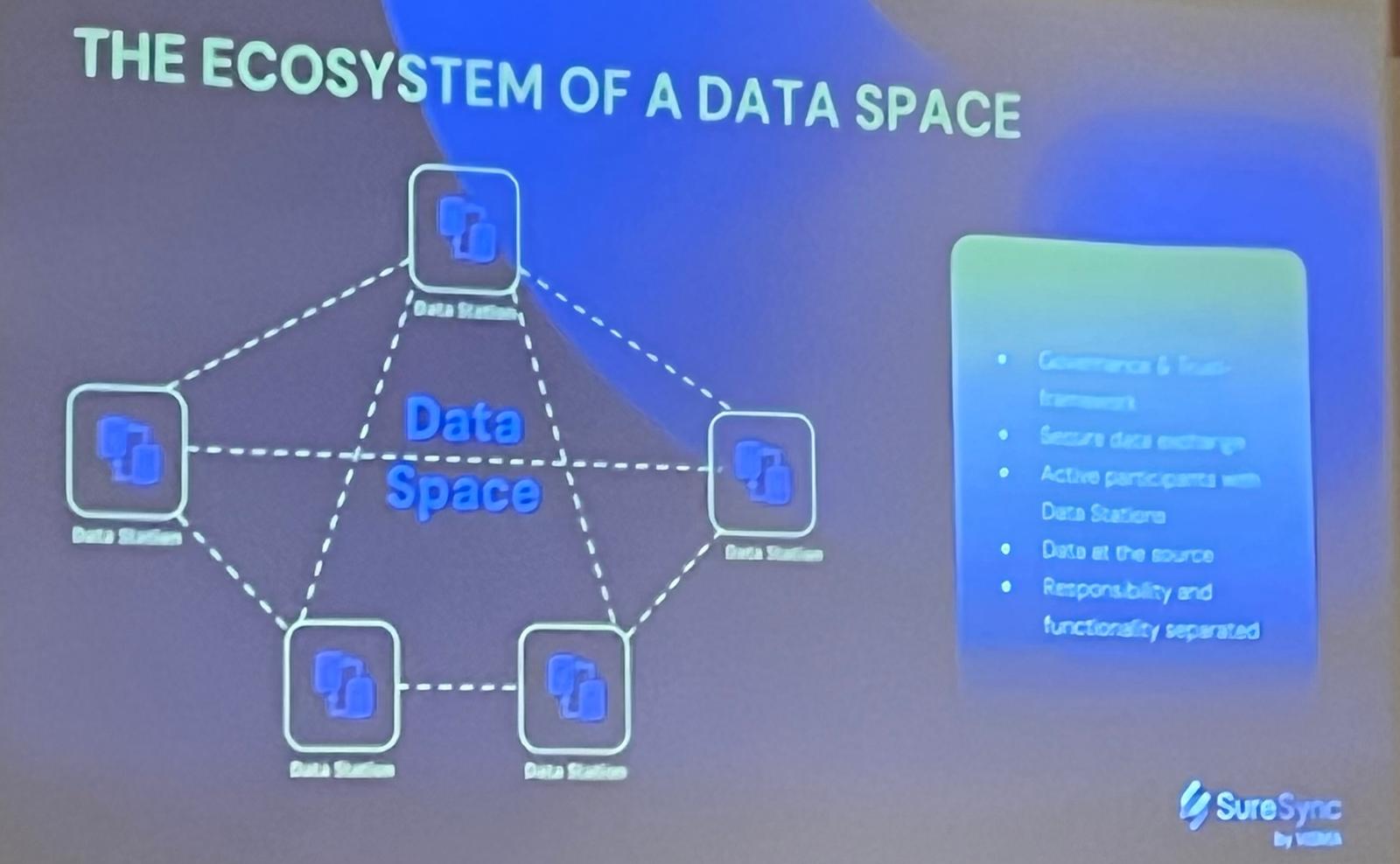
  5. Visma Connect (Dyone van der Leer-de Mari) - They want to share data following a federated data model. Currently only 10% of the data is accessible for use, according to her. They made a ecosystem of a data space. They also build taxonomies, including the taxonomy used by the Dutch government.
  6. Roseman Labs - they are building encrypted data spaces to enable "one to create insignts from data that one doesn't have."
  7. Euretos - help scientists to go FAIR.
  8. dsm-firmenich - develops a food application focusing on nutricion and beauty in an innovative way. Involved in a project called ConnectedLabs that organize data in a consistent way. They are moving more and more to a data-centered company
  9. Pistoia Alliance (Christian Baber/Giovanni Nisato) - this ONG has the mission to lower the barrer to innovation through pre competitive collaboration. They have top clients from the farmaceutical domain. GoFair is also a member.
  10. CODATA - organization aiming at "promoting global collaboration to improve the availability and usability of data for all areas of research" (from the website)
Figure from Visa Connect (see list above)


Figures from Eureto


Figure from Pistoia Alliance:


There were interesting presentation of videos from GoFair-Brazil and Semantic Climate

and a brief talk from GOFair-USA.

There was a panel with partners from Africa:
- Easu Yazew (from VODAN)


- President of the African Academy of Sciences


- FoodSafety for Africa


They have an interesting focus on knowledge management. I talked to Peter Scelstraete (from Ubuntoo BV) and told him about my views on KM, i.e., it needs to please in the first place the knowldge holders; and exchanging tacit knowledge can only be based on social interaction.